Some initial thoughts on reading the UBS6 Greek New Testament

It’s been a busy and productive few months thesis writing. In the midst of family, church and study life, it was a blessing to receive in the mail two books hot off the press (Dankeschön Jotham!):

  1. The Reader’s Edition of the Sixth Edition of the United Bible Societies’ Greek New Testament (more commonly known as UBS6),
  2. An updated textual commentary by Prof Hugh Houghton to help make sense of the UBS6 edition (here’s a helpful review).

It definitely can’t be overstated how much of a privilege and kindness from God it is that we have such ready access to God’s Word, researched and presented so meticulously and beautifully (the use of Alegreya Sans font in the Reader’s Edition looks gorgeous). With this in mind, based on some initial reads of UBS6, it seems like there’s least three important changes coming to the default scholarly editions of the New Testament (UBS6/NA29), which will eventually affect most Christians at some stage.

1) The order of the books in the Greek New Testament has been changed: the Pauline epistles now appear after the Catholic Epistles, and Hebrews is placed between 2 Thessalonians and the Pastoral Epistles. As others have already pointed out, this is totally unlike almost every modern Bible translation (even though it does better reflect what the earliest Greek manuscripts did with the NT canon). So it will definitely be a major adjustment if this book order becomes the basis for future translations and commentaries (although not unprecedented – the Tyndale House Greek New Testament in 2017 also put the Catholic Epistles first, after the Gospels).

Table of Contents, UBS6 Reader’s Edition. Note too how Hebrews sits between 2 Thessalonians and 1 Timothy, in the midst of the Pauline epistles – so the book order implicitly favours Pauline authorship of Hebrews.

2) Every verse assigned a number within the New Testament is now included in the main text. You know all those “missing verses” that King James-only advocates complain have been removed from the Bible? They’ve all been slotted into the main text in UBS6 (albeit with double brackets [[ ]] to show the editors think they’re later additions). The net effect is that a large number of previously ignored readings have been welcomed back to the main text. I think this particular way of presenting the text will completely change how future Bible translators and preachers work from the Greek NT (and commentaries based on it), as they’ll now need to more consciously decide at each point how to address these variants – after all, it’s right there in the text!

Here, the UBS6 text includes Acts 8:37 (the Ethiopian eunuch’s confession of faith to Philip) in double brackets. As far as I can tell, the UBS6/NA29 is the first edition ever in the Nestle-Aland text tradition to include all verses in the main text (for example, Eberhard Nestle’s 1st edition just skipped verse 37).

3. As with the previous version of UBS, the editors have adopted the ECM text where it’s available (Mark, Acts, Catholic Epistles and Revelation), including the changes to the text from there (you can see the latest Greek text for yourself on the digital version of ECM, hosted on the INTF website). However, what the UBS editors have done with Ephesians and other parts I’ve read so far is anything to go by, there seems to already be numerous edits to the rest of the NT as well, including changes to paragraphs, punctuation, formatting throughout the UBS/NA text. What the standard UBS6/NA29 text will look like in the standard editions (to be published October 2025), and whether they match or reflect the earliest manuscripts of the Greek New Testament remains to be seen, but these choices do influence how we read the passage (ask me how in a few months, or once the thesis is “nailed” – Lord willing!).

Here in Eph 5:3, a new paragraph has been added (it wasn’t there in UBS5 or NA28). With ECM Pauline Epistles still to come, we’ll have to stay tuned for more updates…
In this part of Colossians, the phrase Μετὰ χαρᾶς (“with joy”) in UBS6 follows the NA28’s choice to format it as the start of a new paragraph (i.e. “With joy, giving thanks to the Father who has qualified…”). It implies that this is the start of a new thought, whereas UBS5 and other Greek editions print the phrase as the final thought of verse 11: ἐν πάσῃ δυνάμει δυναμούμενοι… εἰς πᾶσαν ὑπομονὴν καὶ μακροθυμίαν μετὰ χαρᾶς “with all power empowered… for all endurance and patience with joy.“)

I’ve also shared a short note on my Academia page with more details (and references), and keen to hear what others think. Have you got your hands on a UBS6 yet? What are your thoughts? I’d love to know.

Thoughts on preaching Matthew’s Gospel over five years

It took nearly five years, 7 different series and over 50 sermons. Yet in God’s kindness, yesterday our English congregation at PCBC completed an expository preaching journey through the gospel of Matthew. Out of the dozen or so sermon series we’ve completed at PCBC English, this one has been the most meaningful to me personally – my first sermon as pastor was from Matthew 1 (in the midst of the COVID pandemic, no less!), while diving into Jesus’s Sermon on the Mount firstly in 2020 and more recently at this year’s Equip Conference continues to convict and challenge my own walk with the Lord.

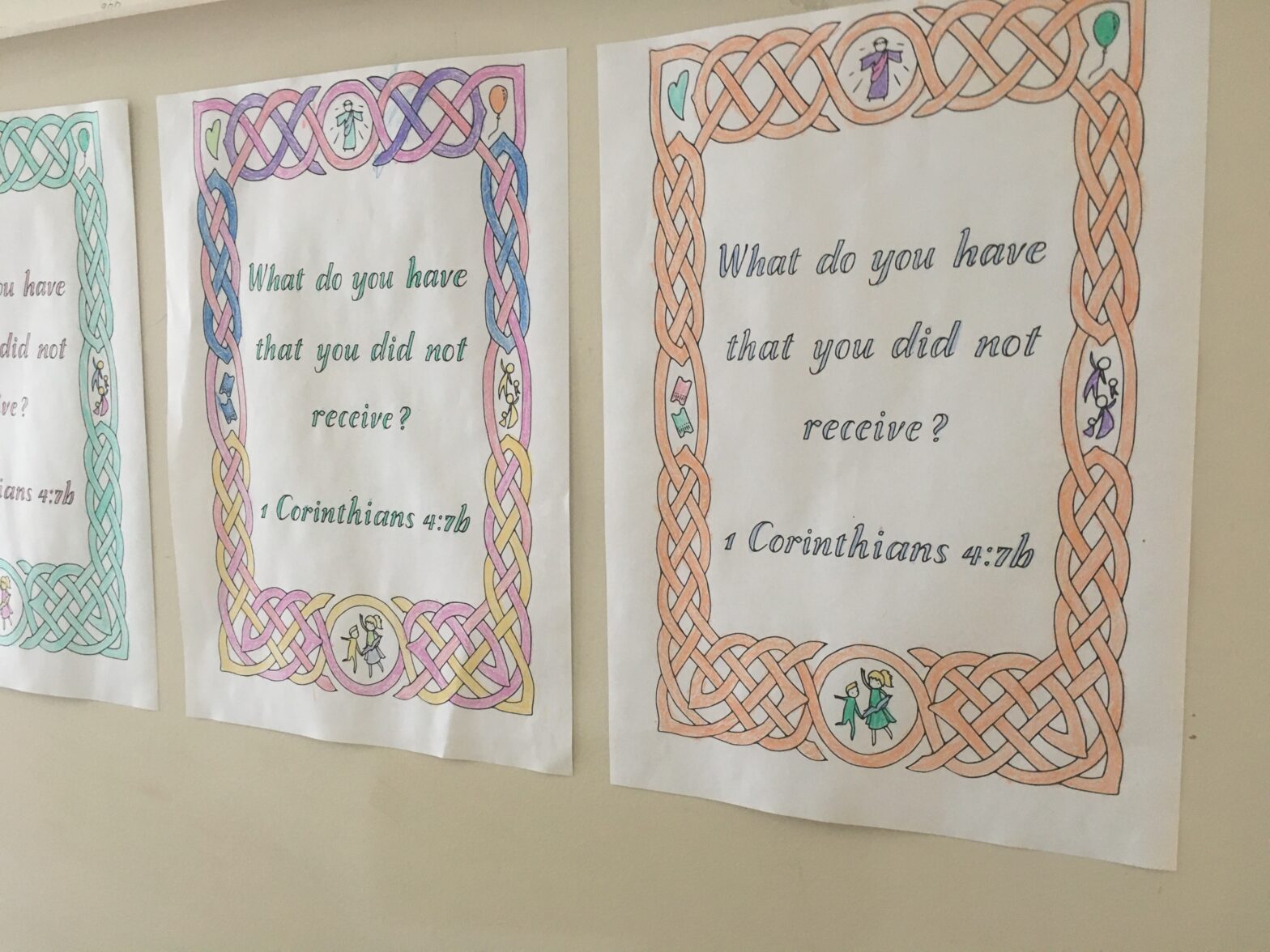
Alongside our senior pastor Albert, it was a privilege to share the pulpit for this Gospel with a number of fellow pastors including Sam Cutforth, John Tucker, “John the Baptist” (😉), Michael Drake, Dave Giesbers, Nathan Cutforth and Peter Anderson (an unforgettable message on the resurrection!). We also took the opportunity to train some of our own members to preach from this eyewitness account, and even had the joy of two students from a visiting college mission team preach from the crucifixion accounts earlier this month. For our children and alternative learners, we also paired the main sermons with worksheets and resources, graciously prepared each week by Eva and Cheryl from our English congregation.

For those preparing their own preaching series through Matthew’s gospel, I personally found the following commentaries most helpful:

  • Matthew (EGGNT) by Charles Quarles – a clear and convenient first stop for original language and syntax-related questions. Anytime I stumbled in translating the Greek text, this volume offered well-informed translation options and helpful preaching suggestions based on the text.
  • Teaching Matthew by David Jackman and William Philip – at times I felt like the authors flew too high above the text (e.g. summarising multiple chapters in one sermon), but in general this book gave some concrete and practical ways to keep my sermons focused on explaining Matthew’s gospel in the context of God’s Old Covenant promises fulfilled in Jesus Christ.
  • JC Ryle’s Expository Thoughts on Matthew were particularly helpful in connecting the truths of this gospel to the thoughts and concerns of the average congregation member. It was a delight to listen over his shoulder, in a sense, to think how the gospel should shape the various concerns of our daily life.
  • For Matthew 5-7 specifically, Jonathan Pennington’s The Sermon the Mount and Human Flourishing: A Theological Commentary was paradigm-shifting in a good way, as was Jonathan Dodson’s Our Good Crisis on the beatitudes specifically (I also shared a few exegetical thoughts on this part of Matthew’s gospel when we encountered it together in 2020).
  • Tim Patrick and Andrew Reid’s “The Whole Counsel of God” gave me permission to think long-term when it came to preaching through this gospel, and offered a practical framework to schedule and plan to preach through the book in a setting where it wasn’t always possible to preach seriatim for more than a few weeks at a time (unlike other series, this book didn’t align with our Cantonese congregations’ preaching schedules).

I also learned a lot from other churches that journeyed through Matthew’s gospel at the same time or beforehand. In particular, I’m especially grateful for Tim Bradford’s input during our time at Petersham Baptist in Sydney when we went through Matthew’s gospel from 2017-18, and for Nathan Cutforth at Papakura Baptist who helped me wrestle with some of the harder parts of Jesus’s discourses (e.g. the end of the age stuff in Matthew 24).

Looking back at older sermons you’ve preached over the years is also a good way to grow in humility! When I scan the sermon archives I’m reminded of rookie mistakes, bad preaching habits, the sermons that felt woefully unprepared in the midst of a busy ministry life, and the attempts to be clever that thankfully nobody will remember once Jesus returns! My hope and prayer each week was simply that sinners were convicted to turn to Christ, and saints were built up to abide in Christ. It’s been a privilege to let Matthew’s Gospel tell the gospel at PCBC English, and to preach the Word in season and out of season.

A few more reflections in no particular order:

  • Five years is probably a bit too long for a sermon series in Matthew – barring our family and a couple of others, most of the people who heard Matthew 1 have since moved on from PCBC English, while others have joined without ever hearing the start. Nevertheless, in the context of a 20 / 25-year preaching ministry, it was worth the time and effort to let the Word set the agenda for us time and time again.
  • There’s a lot of time and energy spent putting into words the vision, mission and values of any organisation (our church included). But there is no better summary of God’s vision for His church than what the resurrected Christ declares to his disciples at the end of Matthew’s gospel: “As you go, make disciples of all nations, baptising them in the Father, Son and the Holy Spirit… and I am with you always to the end of the age.” If we ever wonder the purpose and vision for any church, Matthew’s gospel makes it clear – to be disciples who make disciples because of the good news about the risen Lord Jesus!
  • The more I’ve read and thought about Matthew’s gospel within a cross-cultural setting, the more I’m convinced that this is the one that came first (i.e. Matthean priority). There are lots of academic debates about this, but it’s interesting to me that for much of church history it was held that Matthew was the first gospel to have been written (followed by Mark, Luke and John, as per our present-day book order). Other well-known authors (e.g. Augustine) have explained this, but I personally see a coherent logic where Matthew was written as a comprehensive account for the first generation of mostly Jewish background believers, while Mark subsequently summarised and rearranged Matthew’s content for a church becoming more multi-ethnic, cross-cultural and less conversant in Old Testament prophecies and typologies.
  • Matthew chapter 1’s long list of names seems to be a rather unexciting way to begin sharing good news. However, there is something particularly resonant in a non-Western church to begin with a genealogy – just as Māori customs begin a serious conversation with a pepeha (introducing one’s place and people), Matthew introduces Jesus’s place and people to a hurting world longing for God to be truly present with us (Immanuel). Preaching through Matthew raised for me how our society’s incessant focus on the individual is not necessarily a worldview that is shared by much of the world.
  • Team preaching carries with it a number of benefits and challenges. It takes more planning and coordination to make sure the gospel is consistently preached and explained season by season. But there is something wonderful in letting people see that it is the gospel (proclaimed through fallible preachers) that speaks, that their pastor also sits under the preacher’s authority, and that it is the Scriptures that serve as our supreme authority on matters of life and faith. It’s also wonderful to look back and see how many different partnerships in the gospel began and continue today through the simple ministry of opening God’s Word section by section, week after week, year after year.

If you’re interested, you can listen in to each sermon series here:

  1. The Return of the King (Matthew 1-4)
  2. The King’s Speech (Matthew 5-7)
  3. Deeper into Following Jesus (Matthew 8-12)
  4. Summer Parables (Matthew 13)
  5. Action Jesus (Matthew 14-16)
  6. Servant King (Matthew 17-20)
  7. Lead Us To the Cross (Matthew 21-28)

Then Jesus came to them and said, “All authority in heaven and on earth has been given to me. Therefore as you go, make disciples of all nations, baptising them in the name of the Father and of the Son and of the Holy Spirit, teaching them to obey everything I have commanded you. And surely I am with you [Immanuel!] always, to the very end of the age.”

Matthew 28:18-20

Reflections on hosting a mission team from Sydney

What happens when you invite an Old Testament lecturer and seven students to join in with a week and a half of ministry and mission at a suburban Chinese church in Auckland, New Zealand?

This past month, our church had the joy of hosting a mission team from Sydney at the bible college where we spent 3 formative years. Having experienced our own formative mission weeks while we were students ourselves, it was a special opportunity to “give back” and also to be mutually encouraged as a church family.

From 5-13 April, our Chinese Baptist church became home base for Geoff, Alby, Grace, James, Jess, Joel, Phoebe and Shincy to put their classroom learning into practice, work as a team, and develop their God-given spiritual gifts and abilities. As a church, we too were pushed outside our comfort zones, with church members opening their homes to strangers (for many it was the first time they’d hosted a non-Chinese person in their homes!), offering hospitality and welcome to people with different meal preferences, and learning how to love and care for a group of bible college students. In the Lord’s kindness, the experience truly was a reflection of both our college’s tagline: “Come, Grow, Go”, and our church’s vision to “make disciples of all nations for Jesus”. The chance to lead worship in song as “Ti Rakau Drive” (our pop-up band with church members and college students) was also pretty special!

On the final day, we gave several gifts on behalf of our church, one being a pair of chopsticks. The symbolism (not original to us!) is special in the context of gospel ministry. Just as both chopsticks are needed to move even a single grain of rice, in God’s kingdom it takes both the prayer partner and gospel worker to fulfil the mission our Triune God calls us to accomplish. As instruments in His hands, our prayer is that this special team will continue to acquit themselves well in their studies, and continue to proclaim Christ and serve His people, for the sake of his holy name.

We’re grateful to God for the opportunity to partner in the gospel this way.

Here’s a summary and photos from the mission team’s own words:

7 April – So far we’ve been involved in three services over the weekend (two Cantonese with Geoff preaching; one English with James Chou preaching), plus kids church, youth ministry, dinner with the young adults, and a late night jam session with the youth!

It’s a quieter day today (Monday). We’ve been hearing from Pastors Albert Tang and William HC about the joys and challenges of ministry at PCBC. There’s also been some time to explore the beautiful Auckland area.

Please pray:

  • For good engagement with folks at a community English class we are running on Tuesday morning
  • For helpful conversations as we head to Auckland Uni on Wednesday to hear from the TSCF team there
  • For good relationships and mutual encouragement with our hosts.

10 April – We’ve had a great few days in Auckland, continuing to partner with PCBC across a range of ministries including an ESL class, young adults ministry, and catching up with church members over meals. We’ve also had opportunity to visit several different Auckland ministries (OMF, TSCF) as well as hearing from a number of pastors and other church leaders. This has been wonderful for granting insight into the challenges and opportunities for gospel work in New Zealand. 

Please pray:

  • For a restful day off tomorrow
  • For participating in a range of evangelistic opportunities on Saturday morning 
  • For James, Jess, and Albert as they prepare to preach this weekend. 

13 April – The team had opportunity to engage in some ‘hobbit ministry’ on Friday! The weekend was filled with evangelism ministries including three church services – Jess preaching in English and translated into Cantonese; James preaching in Mandarin; and Albert preaching to the English congregation.

Then final farewells before heading to the airport. Please pray for safe travel home to Australia and for the ongoing work of the gospel in Pakuranga.

Thoughts on preaching Ezra-Nehemiah

It’s the clichéd answer on how to spur a church towards corporate unity around a building project: trot out a teaching series on how Ezra and friends rebuilds the temple, or how Nehemiah and friends restore the walls of Jerusalem, and exhort brothers and sisters to unite and do the same. But more than likely, we’re less enamoured by the long lists of names (repeated several times), puzzled by the jumps back and forth in time, and confused by some of the actions of the titular characters (Ezra pulls his beard, while Nehemiah pulls others’ hair?) And where do these books fit in God’s grand story of redemption? At the heart of these books, we see a sovereign God working through human action to make a people for Himself – precisely the same theme that Jesus’s death and resurrection fulfils, and a relevant message for any church of any age, culture or setting.

Our Chinese-heritage church spent much of this year preaching through Ezra & Nehemiah. As part of our church’s biennial theme, “United in Service”, it was fitting to hear closely from this part of God’s Word and learn from a time when God’s rescued people seemed to be at their best. Certain parts of the story hit differently in the context of a cross-cultural, immigrant church: the reverse-immigration from Babylon to Jerusalem; first-generation and second-generation differences in the life of God’s people (e.g. the older men who wept at the temple foundation); the complexities when religious opponents are related to you; and the disappointment felt by Nehemiah when the Israelites had lost their “mother tongue” (hint: he’s not sad because of the Hebrew per se).

Going through this book again reminded me of the difficulty of preaching Old Testament narrative, the value of wise friends who have thought deeply about the rhetorical function of these books (thank you Alex Prentice!), and how much these accounts of God’s Old Covenant people, even at their best, still reveal their desperate need for a greater Priest, Leader and Redeemer to create a transformed people from the inside out. This series was another good opportunity to experience the necessity and power of Old Testament preaching that exalts Christ, rather than burden us with works.

In preparation for the series, I found the following books most helpful:

  • Dean Ulrich’s Now and Not Yet: Theology and mission in Ezra-Nehemiah (from the NSBT series) gave some of the most clear and sensible Christ-connections, and helped me to keep returning my sermons back to the missional purpose of God orchestrating Israel’s return to Jerusalem. I was convinced by Ulrich’s argument that, rightly understood, Ezra-Nehemiah lays out a mandate for mission (taking part in God’s purpose for his world) that Jesus later fulfils in his first coming and beyond. There is joy-filled, genuine restoration ‘now’, but hope in God’s promises (‘not yet’) as His people follow His instructions concerning the mission laid out for them.
  • The Two Horizons Old Testament Commentary on Ezra and Nehemiah (co-written by David Shepherd and Christopher Wright) was also helpful. It goes a bit deeper into the Hebrew and Aramaic text, and helps to answer a few thorny textual questions.
  • For Ezra specifically, I found Teaching Ezra by Adrian Reynolds (Proclamation Trust) an excellent guide to preparing sermons from this book. Because Ezra is the more neglected of the two books, I appreciated the range of thoughts on how to connect the events to Christ in helpful ways.

For preachers, teachers and keen Bible readers, here are some more thoughts in no particular order:

  • On structuring a series, I’d strongly recommend preaching both Ezra and Nehemiah, rather than taking one and leaving the other out. Although this makes a sermon series longer, it becomes far easier to see how connected they are. In both Ezra and Nehemiah, rebuilding the temple / wall is followed by the necessity of rebuilding the people through God’s revealed Word.
  • Ezra-Nehemiah is a story of God’s people at their best who return to worship Yahweh, yet fail and leave us longing for a better Redeemer to come. It’s an opportunity to consider what worship songs support this theme. In particular, songs that use “we” language will support the series more consistently than “I” language. We also want people to see Jesus as the better Israel / Son of God, better Leader, and better Teacher.
  • The repeated lists of names are not identical, and so they serve slightly different purposes. One is to emphasise the priorities of the people – in Ezra 2, so much care and attention is devoted to the names of families involved in reestablishing proper worship. The second list of returnees (Ezra 8:1-14) is smaller than the first but is more generous. The detailed list of those who had intermarried sinfully in Ezra 10 emphasises the seriousness they took the situation.
  • I think it’s right to portray Ezra (from Ezra 7 onwards) as a 2nd-generation, cross-cultural gospel worker. After all, he’s trained and sent into a foreign land (at least to him), to teach and disciple a subsequent generation of returnees some 58 years after they went on mission. It’s less a church-plant-from-scratch moment but a revitalisation work. For God’s glory to be truly displayed among the nations, it is more than a temple is required – the people themselves need to be rebuilt, and it will have to be done through the Word of God, by someone fully devoted to explaining it and living it out.
  • It is very tempting to turn both Ezra and Nehemiah into people to emulate. But a Christ-centred reading will need to show how as noble as they were, they had their flaws and leave us longing for a better Priest, Teacher and Leader. The final chapter of both books are perfect opportunities to reflect on the limitations of these human leaders, the harshness of their actions. Sending wives away and beating up husbands is the antithesis of how Jesus will one day deal with sin and rebellion to God’s Word.
  • When the story takes a “we will do this” turn in Nehemiah 10 with the whole country making promises), it’s important to point out the awkwardness of those vows early and often. On first glance it can seem like a wonderful moment of collective solidarity, yet by the end of the book, the side-effects and consequences of this rule-based living comes back to haunt them. I made the comparison that looking back on my wedding vows brings joy and sorrow (joy because of God’s grace towards us, and sorrow because I’ve failed to keep the vows time and time again!) In the same way, we need a bit more skepticism when Israel makes their bold promises because each of them are subsequently forsaken in Nehemiah 13.

Our church considered Ezra & Nehemiah over 25 series (11 in Ezra and 14 in Nehemiah), though we could have certainly combined 1 or 2 sermons. You can check out the entire series here.

“Unanswered Questions” (Matariki whakāro)

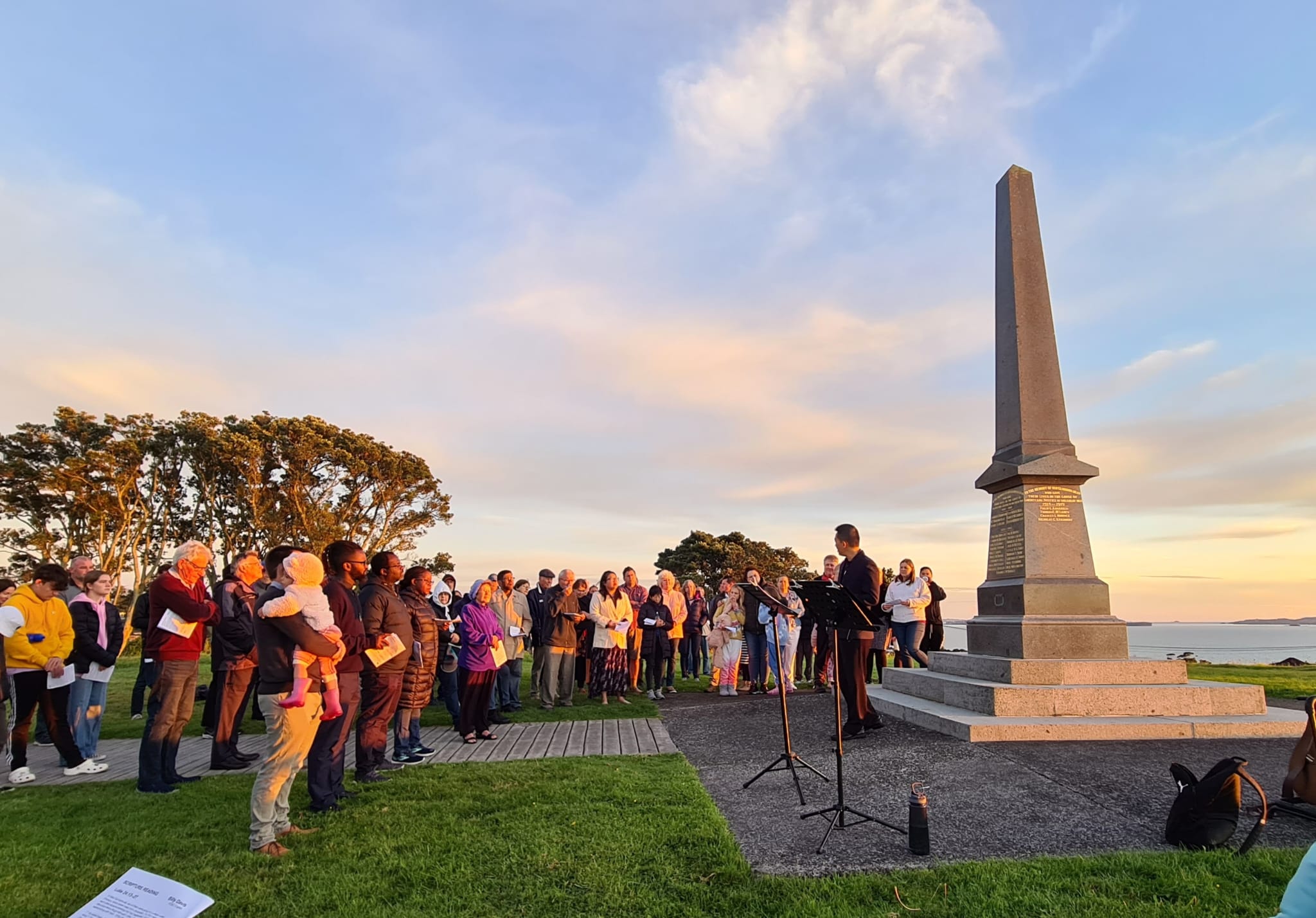
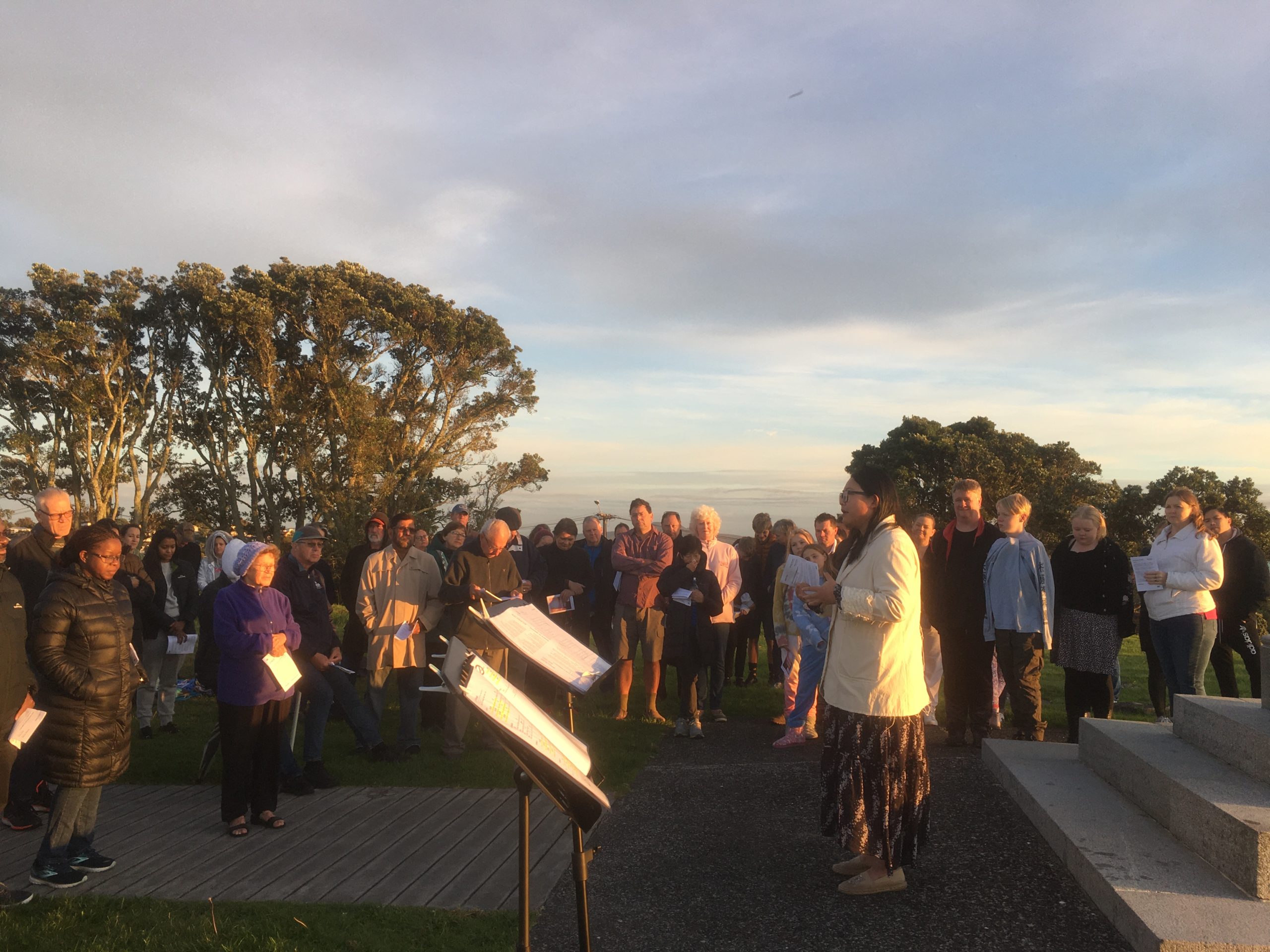
When my GP invited me to “join us for Matariki” at his family practice to give a “small scripture sharing”, I initially didn’t want to do it! In our cultural moment, it’s not always welcomed when Tāngata Tiriti (people here by right of the Treaty of Waitangi) speak for Māori about their customs and values. Nevertheless, the Lord rebuked me from 2 Timothy 4:5: “But you, keep your head in all situations, endure hardship, do the work of an evangelist, discharge all the duties of your ministry.” So I showed up at Meadowbank Medical yesterday without my community services card but rather, with a guitar and Bible in hand.

It turned out to be a beautiful time. The hangi was delicious, the chats were appreciative, and I was even roped in to sing “Tutira mai nga iwi” together! Significantly, one of the members of our church (Billy Davis, Ngāti Porou) kindly offered to join me in sharing about what Matariki means to Māori. For my part, I used my time as an opportunity to share from Job 38:31 to the dozen or so GPs, nurses, and healthcare professionals about the unanswered questions that confront us, the wisdom of pondering on Matariki like God challenges Job to do in this verse, and of the joy that stargazing brought to some wise men many years later. I’m still working on the art and craft of being gentle, respectful and persuasive among non-Christian audiences (especially as a novice learner of all things Māori). So feel free to let me know how this 8-minute whakāro (thought) from this whakatauki (saying) speaks to you!

“Unanswered Questions” (Job 38:31), 27.6.24, Meadowbank Medical Centre Matariki Celebration

[Pepeha]
Tēnā koutou e te whānau Ōrakei, (Greetings Meadowbank family)

ko Maungarei te maunga, (Mt Wellington is the mountain)…

ko Tāmaki te awa, (Tāmaki is the river)…

Kei te noho au ki Tāmaki Makaurau, ki Pakuranga, (I live in Auckland, in Pakuranga)…

nō Taina, Taiwana me Marēhia ōku tīpuna; (China, Taiwan, Malaysia, Aotearoa is my ancestry)

ko Wiremu tōku ingoa; (my name is William)

… and most times I’m here as Dr Choonwei’s patient, but today he’s asked me to give a short whakāro (thought) on Matariki. I do so as Tangati Tiriti (non-Māori), and a Christian minister from Te Hahi Iriiri, the Baptist Churches of Aotearoa. Billy and I are both part of Pakuranga Chinese Baptist Church not far from here – with a number of our members also enrolled at MMC, we are supporters of Manaaki Healthcare and your kaupapa.

(No one wants kai that’s cold, and it’ll be great to hear some of your thoughts on what Matariki means to you. So I promise to stay under single consult length!)

Whatever your faith background, all of us can embrace Matariki at some level. We all love a long weekend (though perhaps not the emails afterwards). Some of us will try out some stargazing, or spend time appreciating our country’s Māori heritage.

And as people who care deeply about health and wellbeing, we will resonate with some themes of Matariki: honouring those who have died, giving thanks for seasons past, asking questions about about the road ahead.

[Questions ahead]

Matariki may be our newest public holiday, but the questions around this season are as old as time itself. Granted, sometimes we Christians don’t do ourselves any favours by acting like we “always have the answers” from this 2000-year old book called the Bible. So I find it really interesting that one of the three times the Bible names Matariki itself, it comes not as an answer, but as a question.

Let me read out Job 38:31 with you, it says:

“E taea rānei e koe te here te huihui o Matariki, e wewete rānei ngā here o Tautoru?”

“Can you bind the chains of Matariki? Or loose the cords of Orion?”

It’s obviously not the typical question you’d hear in a consultation room! But it’s worse than you think. Some of us here get worried about consults going overtime, but be thankful Job’s not enrolled in your practice: his problems were too many to count! He lost his fortune, his children died in a storm – and he got an incurable rash! So yes, Job naturally had a lot of questions for God.

It’s always nice to give clients clarity, and patients good answers. (Dr Luke’s latest answer is caffeine for pain relief!) But when God finally shows up in chapter 38, He gives Job no answers – just a barrage of questions, including this one: Can you tie up Matariki’s chains? Or undo Orion’s belt?

Maybe we can relate to poor Job. Suffering can seem like a riddle. Perhaps this Matariki you have similar unanswered questions. In my line of work, there’s been many a time where I’ve driven home with unanswerable questions. Why did it have to be stage 4 cancer? Why this family and not that one?

[No easy answers]

One thing we learn from this whakatauki (saying) on Matariki is that it’s OK to not have answers straight away. It might seem odd to question the limits of our knowledge: I’m sure your patients don’t walk in thinking: “I need to see a doctor who doesn’t have all the answers!” But Matariki should humble us. Can you bind those stars? No! None of us are good at everything. I may be familiar with the Bible, but I can’t auscultate for chips. You’re some of the smartest people serving in Meadowbank, yet you still google for help during some of your cases! It’s OK not to have all the answers straight away. So this Matariki, I plan to fly kites with my kids and leave the messages unread. We can enjoy some rest this holiday, even if our to-do lists are unfinished. You can have a coffee with a struggling friend, leave their tough questions unanswered, and just be present.

Job’s whirlwind encounter with God didn’t turn him into an expert. Yet he was transformed. While Job never got all his questions answered (and nor do we), the next time he saw Matariki rising, he was wiser from his encounter with Te Ihōwa Atua, the LORD God who made the stars (Gen 1:17) and asks this simple question:

E taea rānei e koe te here te huihui o Matariki?
Can you bind the chains of Matariki?

[One stellar answer]

Every time I gaze into the stars on my morning run, I have many unanswered questions. Yet I see the fingerprints of a Maker who loves me and sent His Son to rescue me.

Because many generations after Job’s Matariki moment, a different star led some wise men to the town of Bethlehem. Some of you will know this story. But in this Middle Eastern town still surrounded by soldiers today, the night sky gave one answer to the many questions these magi had. “Where is the King?” they had asked. “For we have come to worship him” (Mt 2:2).

But instead of a god of their own imagining, they come face to face with the boy Jesus. Ihu Karaiti. Descended from kings. A “Bright Star” for dark times: born in Bethlehem, lived in Galilee, died in Jerusalem, rose again to give life everlasting. For Christians, this Jesus is the Bright Morning Star. Our Matariki. “When they saw the star, they were overjoyed.” (Mt 2:10) And if joy sounds too good to be true, talk to someone about it. Find a Wayfinder for your spiritual journey. Can we bind the chains of Matariki? No. But can they point us to the King of Kings? Can I encourage you, don’t leave that question unanswered. Ngā mihi o Matariki, te tau hou Māori. Tēnā koutou.

For Reflection:

  1. How will you enjoy this Matariki holiday? What will you leave unfinished and unanswered to do so?
  2. What hard questions are you facing in your practice / family / life? What will help you, like Job, be OK about not having all the answers?
  3. How can the stars (or who they point to) humble you or change your perspective?